

Consumer Electronics Market Insights 2025-2035: 7.10% CAGR Growth
Consumer Electronics Market analysis revealing key trends, growth opportunities, and industry insights. Discover market projections, innovation drivers, and strategic opportunities shaping the future of consumer technology.
 Coralia Joe
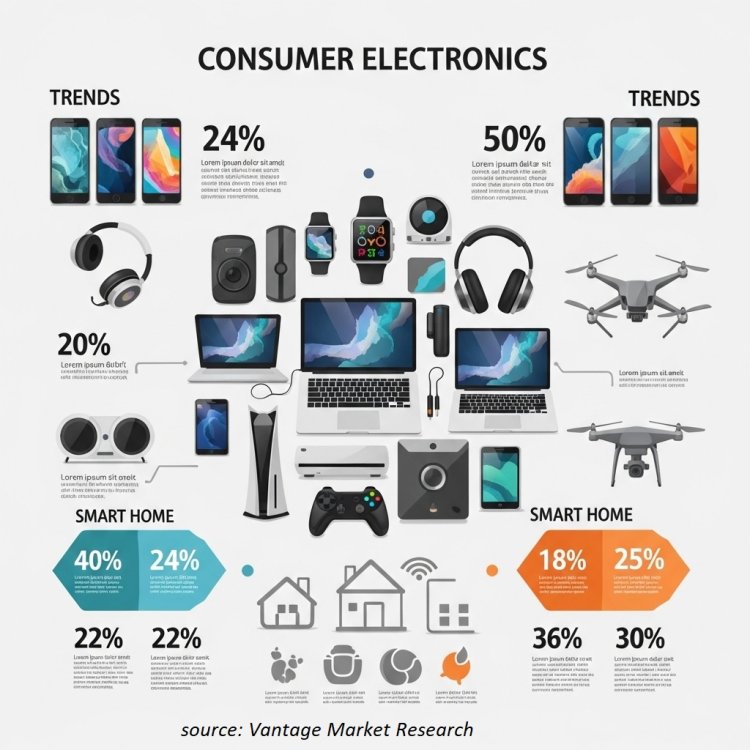
Global Consumer Electronics Market to Double to USD 1594.2 Billion by 2035
The global Consumer Electronics Market is undergoing a remarkable trajectory of expansion, evolving from utility-driven devices into pillars of connected living. From smartphones to smart TVs and wearables, electronics now play an integral role in daily life. Fueled by technological advances, rising disposable incomes, and digital transformation, the market is set for significant growth through 2035.
Our comprehensive Consumer Electronics Market report is ready with the latest trends, growth opportunities, and strategic analysis. View Sample Report PDF.
Key Takeaways
- The global consumer electronics market was valued at USD 750.5 billion in 2024 and is projected to reach USD 1594.2 billion by 2035, growing at a CAGR of 7.10%.
- Rising adoption of smart devices, IoT integration, and AI-enabled electronics is a primary driver of market expansion.
- Smartphones, laptops, wearables, and home automation systems are the fastest-growing product categories.
- Asia Pacific leads the market, driven by China, Japan, and South Korea, while North America shows strong demand for high-end and premium electronics.
- Key players include Samsung, Apple, Sony, LG Electronics, Panasonic, Xiaomi, HP, and Dell, focusing on innovation, sustainability, and digital ecosystem expansion.
- The market is witnessing advancements in 5G-enabled devices, AR/VR integration, flexible displays, and energy-efficient smart appliances.
Premium Insights
Rising demand for smart homes, AI-powered manufacturing, and IoT-embedded devices is transforming consumption patterns. Market innovation is targeting seamless connectivity, enhanced audio-visual experiences, and energy efficiency. Consumers increasingly favor multifunctional products—evident in the surge of wearables, smart displays, and home automation solutions.
The consumer electronics market, valued at USD 750.5 billion in 2024, is projected to expand to USD 1.5942 trillion by 2035, achieving a robust CAGR of 7.1%.
The market features a mix of global giants—Samsung, Apple, Sony, LG, Panasonic—and niche innovators. Product cycles are shortening, with rapid innovation and fierce pricing competition. Brands invest heavily in R&D to stand out through smart, eco-friendly, and connected products. Regional players focus on low-cost strategies and segmented product lines.
For Consumer Electronics Market Research Report and updates detailed: View Full Report Now!
Product Insights
The consumer electronics market is segmented into smartphones, laptops & tablets, televisions, wearables, home appliances, and others. Smartphones remain the dominant category, driven by 5G adoption, AI integration, and advanced camera technologies. Wearables, such as smartwatches and fitness trackers, are rapidly growing due to rising health awareness and connected lifestyle demand. Televisions with OLED, QLED, and smart features are gaining traction in premium households. Meanwhile, energy-efficient home appliances and smart home devices are increasingly adopted, aligning with sustainability trends and modern lifestyles.
Application Insights
Consumer electronics find applications in personal, professional, entertainment, healthcare, and smart homes. Personal usage, especially smartphones and laptops, dominates the segment, driven by digital connectivity and lifestyle integration. Entertainment applications are expanding with AR/VR devices, gaming consoles, and streaming-supportive gadgets. Healthcare applications, such as wearables and smart diagnostic devices, are witnessing strong growth as remote health monitoring gains adoption. The smart home segment is accelerating with demand for AI-powered home assistants, security systems, and energy-efficient appliances, ensuring convenience, safety, and sustainability.
Regional Insights
North America in Consumer Electronics Market Trends
North America’s consumer electronics market is driven by high adoption of advanced technologies, including smart home devices, wearable electronics, and 5G-enabled gadgets. The U.S. dominates the regional demand due to a strong innovation ecosystem, high disposable income, and early adoption of emerging technologies. Consumers are increasingly shifting toward IoT-enabled devices and connected ecosystems. Additionally, the rise of e-commerce platforms enhances accessibility, further boosting sales. Major players leverage aggressive marketing, strategic partnerships, and product differentiation to maintain competitiveness.
Europe in Consumer Electronics Market Trends
Europe’s consumer electronics market benefits from rising demand for sustainable and energy-efficient products, especially in Western Europe. Strong regulatory frameworks around energy consumption and e-waste recycling drive manufacturers to innovate eco-friendly devices. Demand for smart appliances, wearables, and 4K/8K televisions is surging, particularly in Germany, the UK, and France. Increasing penetration of connected devices and robust broadband infrastructure accelerates adoption of digital solutions. The market also witnesses growing interest in refurbished electronics, aligning with the region’s sustainability-focused consumer preferences.
Asia Pacific in Consumer Electronics Market Trends
Asia Pacific leads the global consumer electronics market, fueled by large-scale production, strong exports, and rising domestic consumption. Countries like China, South Korea, and Japan are global manufacturing hubs, while India drives demand growth through its expanding middle class and digital transformation initiatives. High smartphone penetration, rapid 5G deployment, and strong demand for affordable electronics fuel market expansion. Local players offer competitive pricing, while global brands dominate premium segments. Government initiatives to boost manufacturing under “Make in India” and similar programs further enhance growth prospects.
Latin America in Consumer Electronics Market Trends
The consumer electronics market in Latin America is gaining momentum due to growing urbanization, rising internet penetration, and increasing access to affordable devices. Brazil and Mexico are the key markets, with strong demand for smartphones, smart TVs, and home appliances. Economic fluctuations impact consumer spending, but the e-commerce boom provides a critical sales channel. Manufacturers are focusing on mid-range devices to cater to cost-conscious consumers. Growing interest in gaming consoles and wearables also creates new opportunities for both local and international players.
Middle East & Africa in Consumer Electronics Market Trends
The Middle East & Africa region is witnessing steady growth in consumer electronics, supported by urbanization, rising disposable incomes, and increasing demand for smartphones and connected devices. The Gulf countries, particularly Saudi Arabia and the UAE, lead in premium product adoption due to higher purchasing power. Meanwhile, Africa sees strong demand for affordable smartphones and energy-efficient home appliances. Government initiatives promoting digital transformation and infrastructure development further drive adoption. E-commerce platforms are also emerging as a vital channel for consumer electronics distribution.
Top Key Companies:
- Apple Inc.
- Canon Inc.
- Dell Inc.
- Samsung Electronics Co.
- Ltd.
- Panasonic Corporation
- Sony Corporation
- Koninklijke Philips N.V.
- Lenovo Inc.
- Hewlett-Packard Company
- Oneplus
- AB Electrolux
- LG Corporation
- Google Inc.
- Microsoft Corporation
- Hitachi Ltd.
- Robert Bosch GmbH
These industry titans lead through brand power, innovation, and distribution scale.
Recent Developments
- Surge in AI integration across smart devices: from smart TVs to home appliances
- Innovations in wearables and AR/VR platforms for immersive experiences
- IoT ecosystems connect devices in smarter homes and health monitoring setups
Consumer Electronics Industry Scope
The Vantage Market Research Report Scope provides a comprehensive analysis of the global industry, covering market size, growth trends, and forecasts across key product categories such as smartphones, laptops, wearables, and home appliances. It examines technological advancements, consumer behavior, and the impact of digitalization on demand. The report evaluates competitive landscapes, innovation strategies, and supply chain dynamics. Regional insights highlight growth opportunities across North America, Europe, Asia Pacific, Latin America, and the Middle East & Africa, helping stakeholders identify emerging trends and strategic investment areas.
Market Dynamics
Driver
The consumer electronics market is driven by rapid technological innovations such as AI, IoT, and 5G, coupled with rising disposable incomes and urbanization. Increasing consumer demand for smart devices, wearables, and connected home solutions is fueling market growth. Growing digital lifestyles, e-commerce expansion, and a focus on entertainment, productivity, and health monitoring further enhance adoption. Additionally, strong demand in emerging economies and continuous product upgrades encourage replacement cycles, positioning consumer electronics as a vital sector for global economic and technological development.
Restraint
High product costs, shorter product life cycles, and fast-paced technological changes act as significant restraints. Consumers often face confusion or reluctance in frequent upgrading due to compatibility issues and limited after-sales support. Additionally, global chip shortages and supply chain disruptions hinder timely manufacturing and distribution. Concerns regarding data privacy, cybersecurity, and electronic waste management also create challenges for widespread adoption. Moreover, intense competition among market players compresses profit margins, impacting long-term sustainability. These barriers can slow down the adoption pace despite rising global demand.
Opportunity
Rising demand for smart homes, energy-efficient devices, and AI-powered consumer electronics creates lucrative opportunities for manufacturers. Emerging markets, especially in Asia Pacific and Latin America, provide immense growth potential due to rising middle-class populations and digital adoption. The integration of augmented reality, virtual reality, and voice assistants is opening new consumer segments. Sustainability-focused innovation, such as eco-friendly gadgets and circular economy practices, further strengthens market appeal. Additionally, the expansion of omnichannel retail, subscription models, and personalized user experiences offers long-term growth opportunities for consumer electronics companies globally.
Challenges
The consumer electronics industry faces challenges such as rising raw material costs, environmental regulations, and e-waste management pressures. Ensuring product differentiation in a saturated market with rapid technological obsolescence is increasingly difficult. Manufacturers also face supply chain disruptions, particularly in semiconductors and batteries, impacting production capacity. Cybersecurity threats linked to connected devices further create vulnerabilities. Additionally, adapting to diverse regulatory standards across regions adds complexity for global players. Balancing affordability, innovation, and sustainability while meeting evolving consumer expectations remains one of the toughest challenges for industry stakeholders.
Global Consumer Electronics Market Report Segmentation
- By Product: Audio & video equipment; major/small household appliances; digital photo devices
- By Application: Refrigerator; Washing Machine; Air Conditioner; Others
- By Region: North America; Europe; Asia Pacific; Latin America; Middle East & Africa
Frequently Asked Questions
Q: What was the Consumer Electronics market size in 2024?
A: USD 750.5 billion
Q: What is the forecasted size by 2035?
A: USD 1,594.2 billion (CAGR 7.1%)
Q: Which region leads both in size and growth?
A: Asia Pacific
Q: Which product segments dominate?
A: Audio-video equipment and household appliances
Q: Who are the leading companies?
A: Samsung, Apple, Sony, LG, Panasonic