
Electric Motor Market to Reach USD 305.6 Billion by 2035, Growing at 6.78% CAGR
Discover insights into the global electric motor market projected to grow from USD 148.67 Billion in 2024 to USD 305.6 Billion by 2035 at a 6.78% CAGR. Explore trends, forecasts, and opportunities driving this growth.
 Coralia Joe
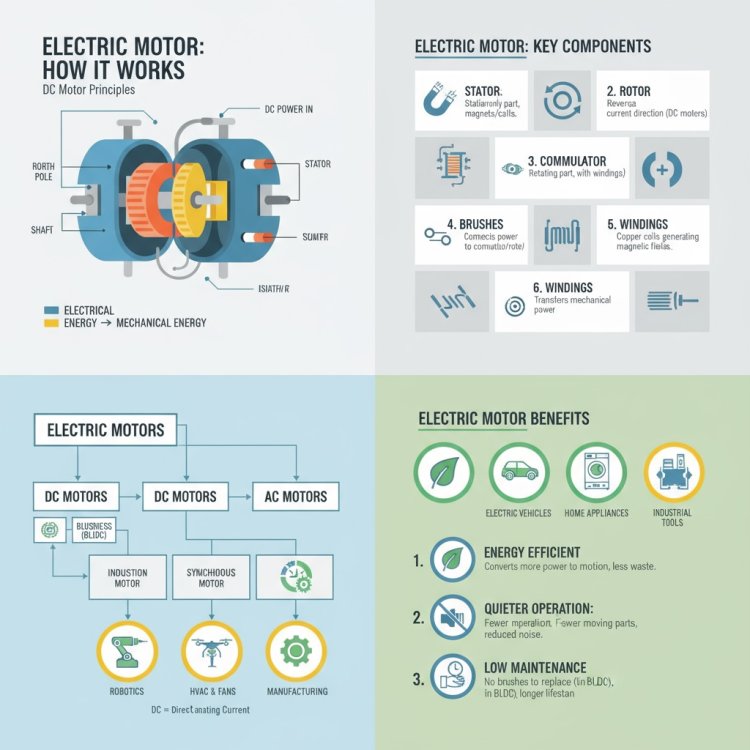
Global Electric Motor Market Poised for Robust Growth: Projected to Reach USD 305.6 Billion by 2035
The global electric motor market is experiencing significant expansion, driven by technological advancements, increasing demand for energy-efficient solutions, and the rise of electric vehicles (EVs). According to recent analyses, the market is projected to reach approximately USD 305.6 billion by 2035, growing at a Compound Annual Growth Rate (CAGR) of 6.78% from 2025 to 2035. Market is driven by the rising demand for energy-efficient solutions across industrial, commercial, and residential sectors. Key factors fueling market expansion include the rapid adoption of electric vehicles, increasing automation in manufacturing, and government initiatives promoting sustainability and renewable energy integration. Technological advancements in motor design, such as high-efficiency AC and DC motors, are improving performance and reducing energy consumption. As industries and consumers prioritize efficiency and environmental compliance, the electric motor market is poised for substantial growth over the coming decade.
Our comprehensive Electric Motor Market report is ready with the latest trends, growth opportunities, and strategic analysis. View Sample Report PDF.
Key Takeaways
- The global electric motor market was valued at USD 148.67 billion in 2024 and is expected to exceed USD 305.6 billion by 2035, reflecting a CAGR of 6.78% during the forecast period.
- Asia Pacific led the market in 2024 with a share of largest market share, driven by rapid industrialization and technological advancements in countries like China, Japan, and South Korea.
- AC electric motors held the largest market share in 2024, attributed to their widespread application in various industries.
- The industrial segment is anticipated to expand at the fastest CAGR over the projected period, fueled by automation and energy efficiency initiatives.
Premium Insights
The electric motor market is witnessing transformative trends driven by technological innovation and growing environmental awareness. The adoption of high-efficiency AC and DC motors is increasing across industrial, commercial, and residential applications to reduce energy consumption. Electric vehicles are significantly boosting demand for specialized motors, while automation and smart manufacturing are propelling industrial motor deployment. Additionally, government policies promoting energy efficiency and carbon reduction are encouraging investments in advanced motor technologies. Overall, innovation, sustainability, and rising electrification are key factors shaping market growth and future opportunities.
The global electric motor market was valued at USD 148.67 billion in 2024. With a projected CAGR of 6.78%, the market is expected to exceed USD 305.6 billion by 2034. This growth is supported by the increasing adoption of electric motors across various sectors, including automotive, industrial, and residential applications. the global electric motor market is moderately concentrated, with a mix of established multinational corporations and emerging regional players. Leading companies such as Siemens, Nidec, ABB, and General Electric dominate key segments through advanced technology offerings, extensive distribution networks, and strategic partnerships. The market is characterized by continuous innovation in motor efficiency, precision, and integration with automation systems. While industrial applications hold the largest share, growth in electric vehicles and smart appliances is driving diversification. Competitive intensity is high, with firms focusing on R&D, sustainability, and expansion into emerging markets to maintain market leadership.
For Electric Motor Market Research Report and updates detailed: View Full Report Now!
Type Insights
The market is segmented into AC motors, DC motors, and hermetic motors. AC motors dominate due to their versatility, reliability, and widespread use in industrial, commercial, and residential applications. DC motors are gaining traction in electric vehicles and robotics for their precise speed control. Hermetic motors are primarily used in HVAC and refrigeration systems, valued for their durability and sealed design. Each type addresses specific operational requirements, efficiency standards, and application demands across diverse sectors.
Power Rating Insights
Electric motors are classified by power rating into low, medium, and high-power categories. Low-power motors are common in household appliances and small machinery, providing efficient and cost-effective performance. Medium-power motors serve industrial equipment and commercial applications requiring reliable output. High-power motors are used in heavy industries, large machinery, and electric vehicles, where high torque and continuous operation are essential. Power rating segmentation helps manufacturers tailor solutions to specific operational and efficiency requirements.
Output Power Insights
Output power segmentation includes fractional horsepower, standard horsepower, and high-horsepower motors. Fractional horsepower motors are widely used in appliances and small devices, providing compact, efficient solutions. Standard horsepower motors serve general industrial and commercial applications, balancing performance and energy efficiency. High-horsepower motors meet the needs of heavy industries, large machinery, and transportation, delivering high torque and reliable performance. Each segment caters to distinct energy, performance, and operational requirements, influencing market demand and adoption.
Rotor Type Insights
Rotor type segmentation includes squirrel-cage rotors, wound rotors, and permanent magnet rotors. Squirrel-cage rotors are widely used for their simplicity, durability, and low maintenance in industrial applications. Wound rotors provide controlled starting torque and are used in specialized machinery. Permanent magnet rotors are increasingly adopted in electric vehicles and precision applications due to high efficiency and compact design. Each rotor type offers unique performance characteristics, influencing efficiency, cost, and suitability for different applications.
End User Insights
End users include industrial, automotive, residential, and commercial sectors. Industrial applications dominate, driven by automation, machinery, and process equipment. Automotive adoption is growing rapidly with the rise of electric vehicles. Residential users demand motors for appliances, HVAC systems, and water pumps. Commercial adoption spans office buildings, retail, and public infrastructure, focusing on energy efficiency and reliability. Each end-user segment has specific requirements, influencing product development, customization, and market growth opportunities.
Regional Insights
North America Electric Motor Market
North America is a key market for electric motors, driven by industrial automation, increasing adoption of electric vehicles, and government incentives promoting energy-efficient solutions. The United States leads in technological innovation and deployment of advanced AC and DC motors. Commercial and residential sectors are also adopting high-efficiency motors to reduce operational costs. Regulatory frameworks and environmental policies further support market growth, making the region a significant contributor to global electric motor demand.
Europe Electric Motor Market
Europe’s electric motor market is characterized by strong regulatory support for energy efficiency and carbon reduction. Germany, France, and Italy are leading industrial adopters, integrating high-efficiency motors into manufacturing and transportation sectors. The automotive industry, particularly electric vehicle production, is a major growth driver. Additionally, increasing investment in renewable energy and smart infrastructure projects is accelerating motor adoption across commercial and industrial applications, positioning Europe as a mature yet steadily growing market.
Asia Pacific Electric Motor Market
Asia Pacific dominates the global electric motor market, driven by rapid industrialization, urbanization, and expansion in electric vehicle production. China, Japan, South Korea, and India are major contributors, supported by government initiatives and infrastructure investments. Industrial automation, renewable energy projects, and smart appliances are boosting motor demand. The region also benefits from low manufacturing costs and large-scale production capacities, making it a hub for global electric motor supply and an important area for future market growth.
Latin America Electric Motor Market
Latin America’s electric motor market is expanding gradually, with Brazil, Mexico, and Argentina leading industrial and commercial adoption. Focus on modernizing manufacturing processes, infrastructure development, and energy efficiency initiatives is driving demand. Residential sectors are increasingly adopting energy-efficient appliances powered by electric motors. Despite economic fluctuations, urbanization and industrial growth are supporting steady market expansion, offering opportunities for manufacturers and investors looking to tap into emerging markets.
Middle East & Africa Electric Motor Market
The Middle East & Africa region is witnessing growing adoption of electric motors, primarily in industrial and infrastructure projects. Countries like the UAE, Saudi Arabia, and South Africa are investing in energy-efficient solutions to support industrialization, construction, and urban development. The rise of automation and electrification in manufacturing, water treatment, and HVAC systems is boosting motor demand. Government initiatives for sustainable energy and smart city development are further driving the market, creating high-growth potential in this emerging region.
Key Electric Motor Companies
Leading companies in the electric motor market include:
- ABB
- Siemens
- Nidec Corporation
- Wolong
- WEG
- Johnson Electric
- Regal Beloit Corporation
- Toshiba Corporation
- TECO Electric & Machinery
- Hyosung Heavy Industries
Recent Developments
Siemens AG announced the launch of a new line of high-efficiency AC motors aimed at reducing energy consumption in industrial applications.
Nidec Corporation expanded its electric motor production facility in China to meet the growing demand from the electric vehicle market.
ABB Ltd. secured a contract to supply electric motors for a large-scale renewable energy project in Europe.
Electric Motor Market Report Scope
The Vantage Market Research report offers a comprehensive analysis of the global electric motor market, covering market size, growth forecasts, and segmentation from 2024 to 2035. It examines motor types, power ratings, output power, rotor types, and end-user applications, providing insights into regional trends and market dynamics. The study also highlights leading companies, recent developments, and technological advancements, enabling stakeholders to make informed decisions, identify growth opportunities, and strategize for investments in energy-efficient, high-performance electric motor solutions across industrial, automotive, residential, and commercial sectors.
Market Dynamics
Driver
The electric motor market is primarily driven by the growing demand for energy-efficient solutions across industrial, automotive, and residential sectors. The rapid adoption of electric vehicles, expansion of industrial automation, and government incentives promoting sustainability are accelerating growth. Increasing focus on reducing carbon emissions and optimizing operational efficiency is encouraging the replacement of conventional motors with high-efficiency AC and DC motors, making these factors key drivers shaping global market expansion.
Restraint
High initial costs for advanced electric motors and challenges in integrating them with existing systems act as restraints. Supply chain disruptions, raw material price fluctuations, and technical complexities in installation and maintenance can hinder adoption, particularly in emerging markets. Additionally, smaller manufacturers may face barriers in scaling production and meeting efficiency standards, limiting market penetration in certain regions and applications.
Opportunity
Technological advancements such as smart motors, IoT integration, and AI-driven predictive maintenance present significant opportunities. The rising demand for electric vehicles and industrial automation in emerging markets offers untapped potential. Investments in renewable energy, energy-efficient appliances, and smart infrastructure also provide avenues for growth, enabling manufacturers to innovate and capture new market segments while improving efficiency and reducing environmental impact.
Challenges
The electric motor market faces challenges related to technological obsolescence, intense competition, and the need for skilled personnel to operate advanced systems. Variations in regional regulations, performance standards, and environmental compliance requirements can complicate market entry. Additionally, balancing cost, efficiency, and performance while meeting diverse industry demands remains a key challenge for manufacturers and investors seeking long-term sustainability and growth.
Market Segmentation
The electric motor market is segmented based on:
- By Type: AC Motors, DC Motors, Hermetic Motors.
- By Power Rating: <1 KW, 1-2.2 KW, 2-375 KW, >375 KW.
- By Output Power: <1 HP, >1 HP
- By Rotor Type: Inner Rotor, Outer Rotor
- By End User: Industrial, Residential, Commercial, Agriculture
- By Region: North America, Europe, Asia Pacific, Latin America, Middle East & Africa.
Frequently Asked Questions
Q1: What is the projected growth rate of the electric motor market?
A1: The global electric motor market is projected to grow at a CAGR of 6.78% from 2025 to 2035.
Q2: Which region leads the electric motor market?
A2: Asia Pacific led the market in 2024 with a largest market share, driven by rapid industrialization and technological advancements.
Q3: What are the key applications of electric motors?
A3: Electric motors are widely used in industrial machinery, HVAC equipment, electric vehicles, and residential appliances.
Q4: Who are the leading companies in the electric motor market?
A4: Leading companies include Siemens AG, Nidec Corporation, ABB Ltd., General Electric (GE), and Regal Rexnord Corporation.
Q5: What are the challenges facing the electric motor market?
A5: Challenges include high initial costs, integration complexities, supply chain disruptions, and competition from alternative technologies.